
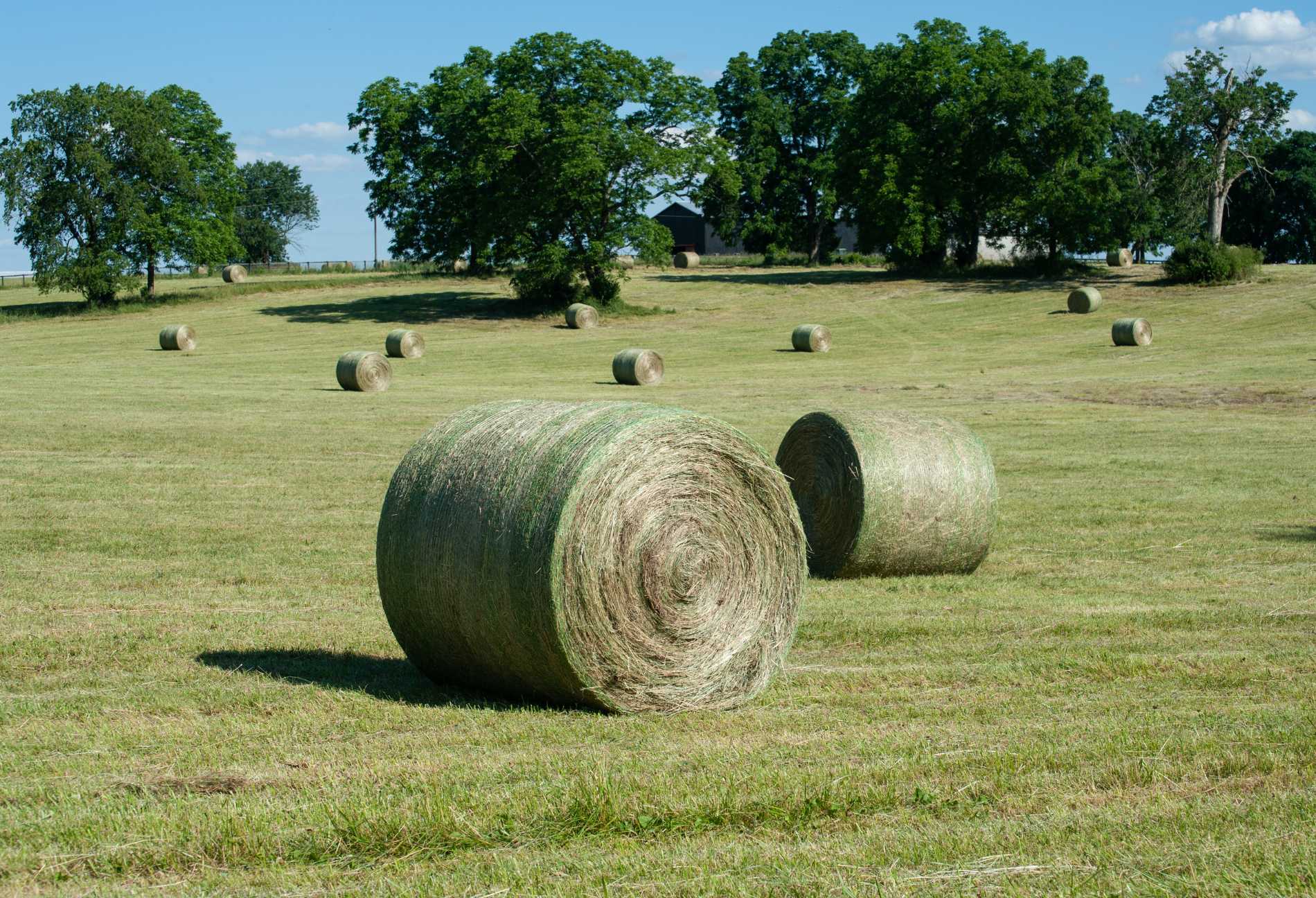
This is Aaron’s experience, and what it could mean for farmers across Eastern Ontario.
Setting Up the Trial
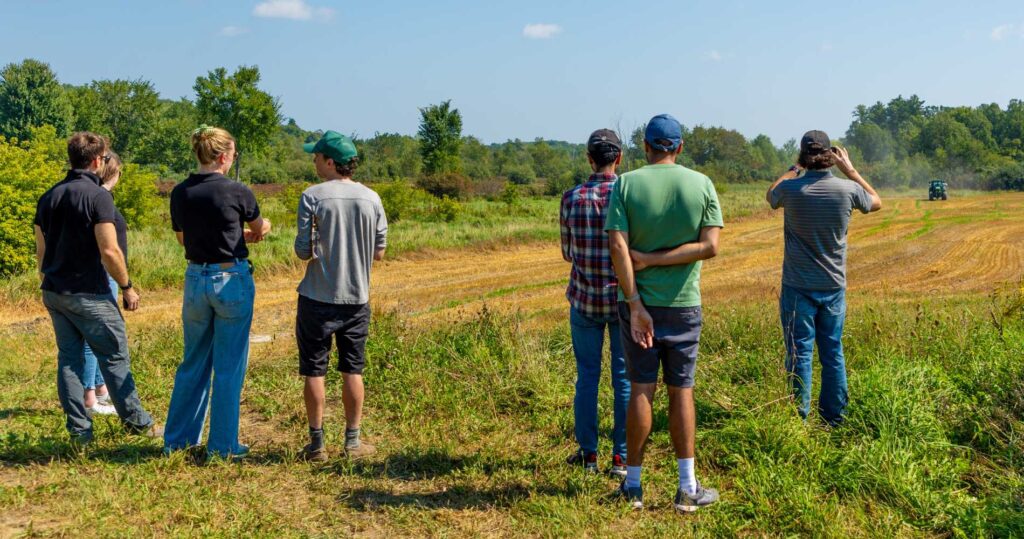
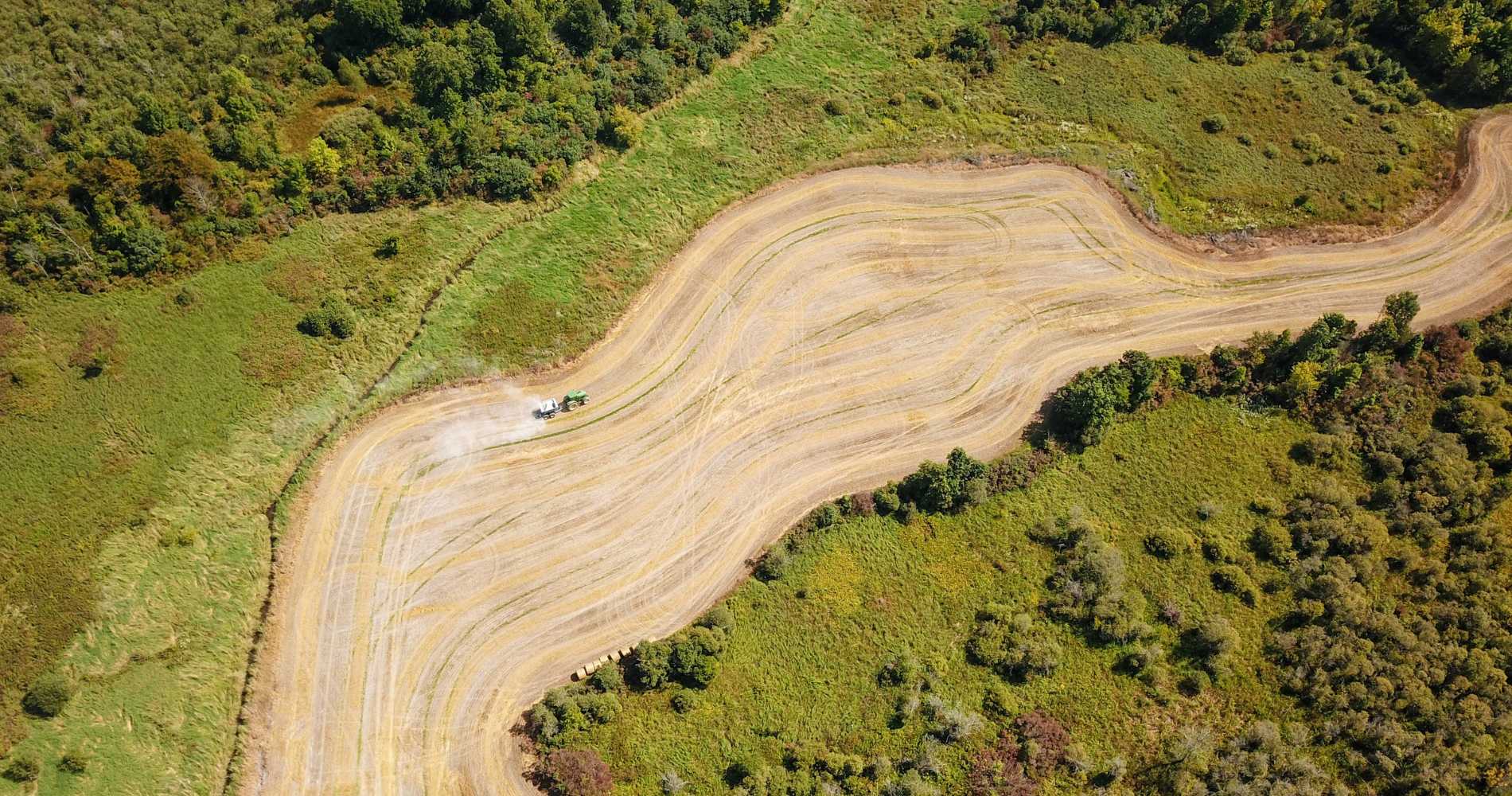
In September 2024, a split-field trial was established across 23.5 acres at Aaron’s farm. The crop was a hay mix of alfalfa, Timothy, and brome grass, typical for the region and representative of many operations in Ontario.
Half of the field was spread with wollastonite at a rate of 4 mt/acre (10 t/ha). The other half was left untreated as a control. No lime or other soil amendments were applied, making it a clear test of wollastonite’s impact.
By mid-2025, two full cuts of hay had been taken, with both yield and nutrient data measured. The difference between the treated and untreated sides of the field was striking.
More Bales in the Barn
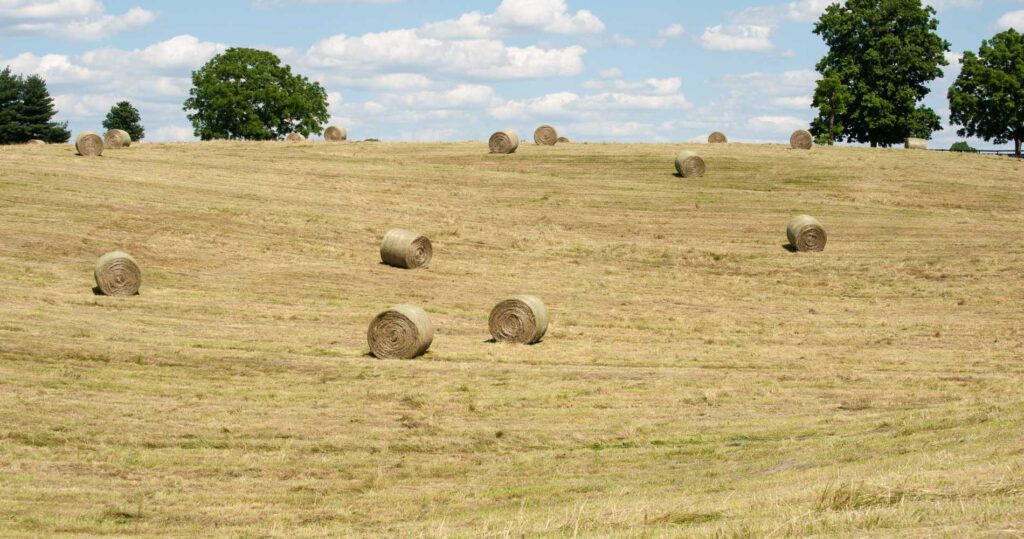
For farmers, results are measured in bales. Aaron’s numbers speak for themselves:
– First cut (June 27, 2025)
Wollastonite: 60.5 bales (4’x5’)
Control: 35 bales (4’x5’)
73% yield increase
– Second cut (July 30, 2025)
Wollastonite: 9.3 bales (4’x5’)
Control: 5 bales (4’x5’)
86% yield increase
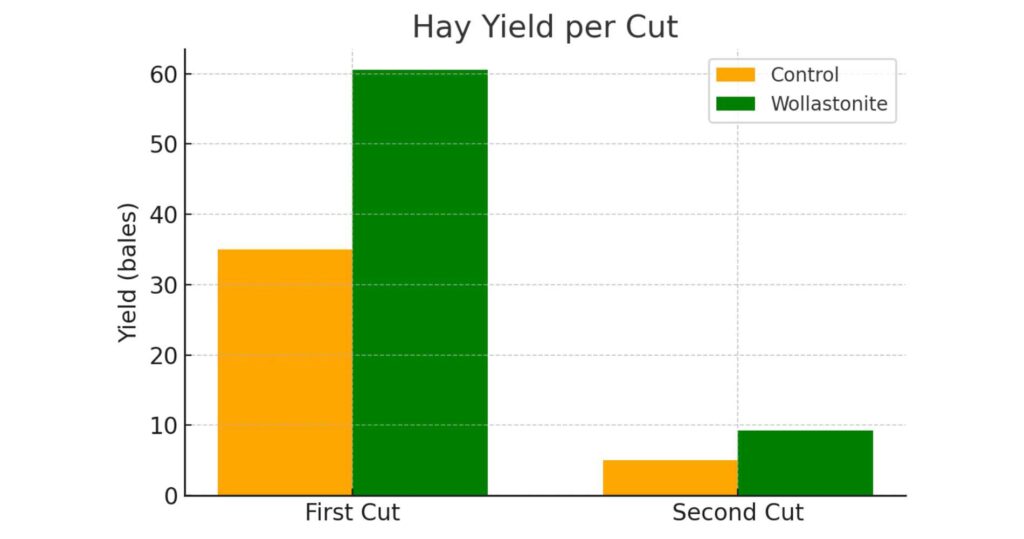
Across the season, the treated half of the field produced around 80% more biomass compared to the control. That means significantly more forage available to feed livestock, reducing the need to buy in extra, and giving the farm a stronger margin.
For a crop as central as hay, those gains make a real difference.
Why the Difference?
The yield response at Aaron’s can be traced back to the way wollastonite supplies both calcium (Ca) and silicon (Si) to crops. These minerals play distinct but complementary roles in plant growth and resilience.
Silicon: Resilience and Efficiency
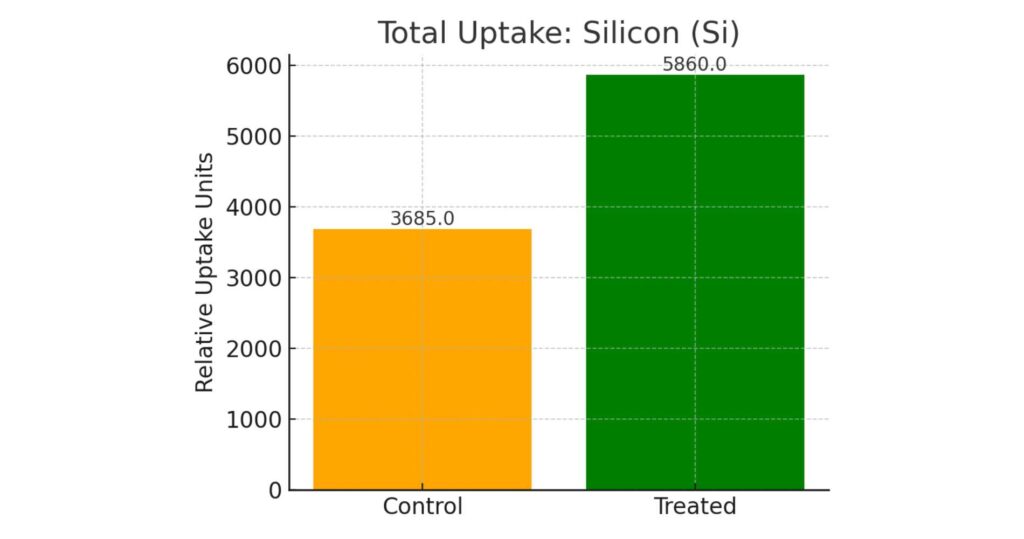
Silicon is not classed as an “essential” nutrient, but years of research show that it consistently improves plant performance. Grasses in particular are silicon accumulators, using the mineral to strengthen cell walls, keep leaves more upright, and improve photosynthesis. Silicon also plays a role in stress tolerance, helping plants withstand drought, pests, and disease.
In Aaron’s trial, plant tissue tests showed silicon concentrations slightly lower in treated plants (a dilution effect), but with around 80% higher yield, total silicon uptake was higher. This indicates that silicon availability was a key driver of the biomass response.
Similar patterns have been seen elsewhere. Studies on cereals such as wheat show that calcium silicate applications improve shoot and root growth, boosting total biomass and nutrient uptake. Other research confirms silicon’s role in helping plants handle abiotic stresses like drought and salinity, while also activating natural disease defences.
Calcium: Strength and Stability
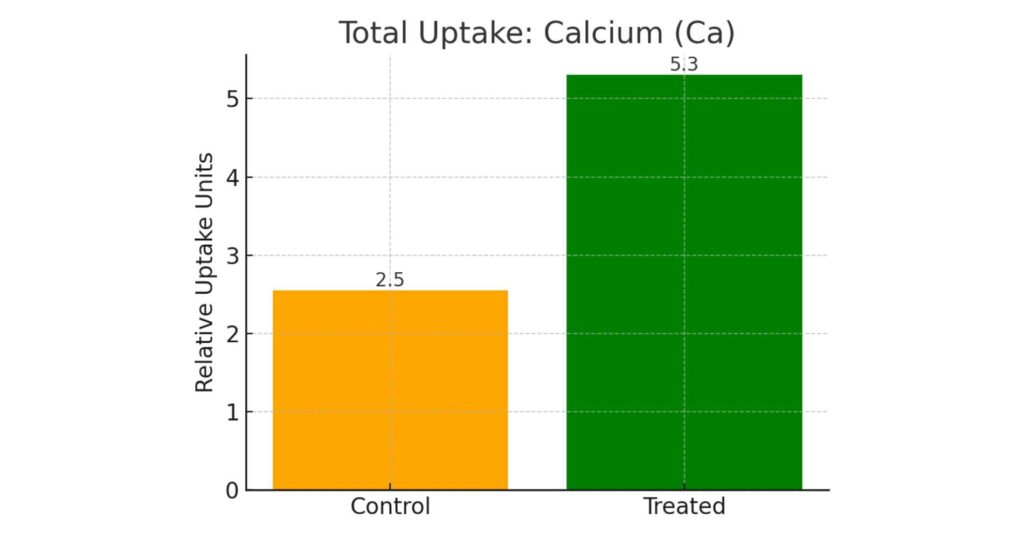
Calcium is critical for cell wall structure and intracellular signalling. By supplying an extra source of calcium, wollastonite supported the expansion of stronger tissues and sustained larger biomass. Total calcium uptake at Aaron’s was substantially higher in treated plants, even though concentrations remained similar.
This proportional increase aligns with the idea that wollastonite gave the crop the building blocks it needed to keep growing vigorously without hitting nutritional limits.
Nitrogen and Sulfur: Higher Protein Content
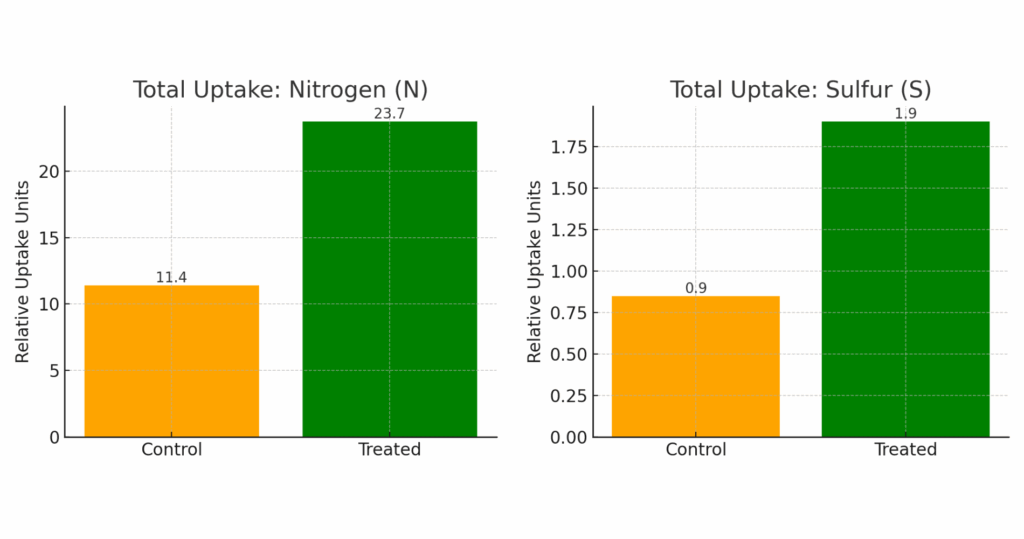
Nitrogen and sulfur are the foundation of proteins. In Aaron’s trial, both nutrients were taken up in larger quantities on the treated side. Sulfur concentrations were higher, while nitrogen showed both higher concentrations and total uptake.
For hay, this matters just as much as yield. Farmers don’t just want more bales — they want bales with good feed value. By supporting greater nitrogen use efficiency and protein synthesis, wollastonite improved both the quantity and quality of the forage.
Micronutrients: Scaling with Growth
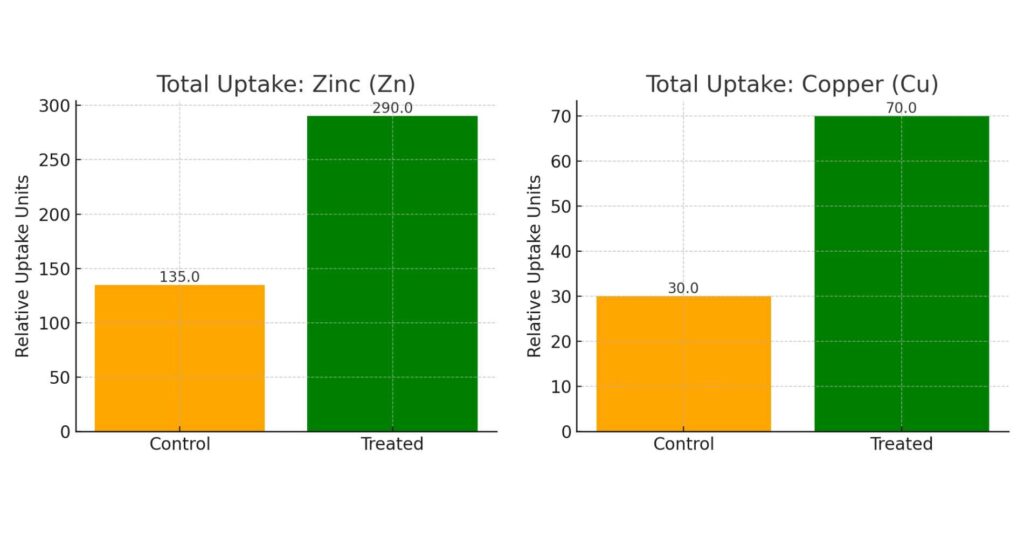
Zinc and copper uptake also increased in treated plants, though concentrations stayed within normal ranges. These micronutrients are cofactors in enzymes that regulate photosynthesis and stress response. Their improved uptake further contributed to crop resilience and quality.
Soil Health Benefits
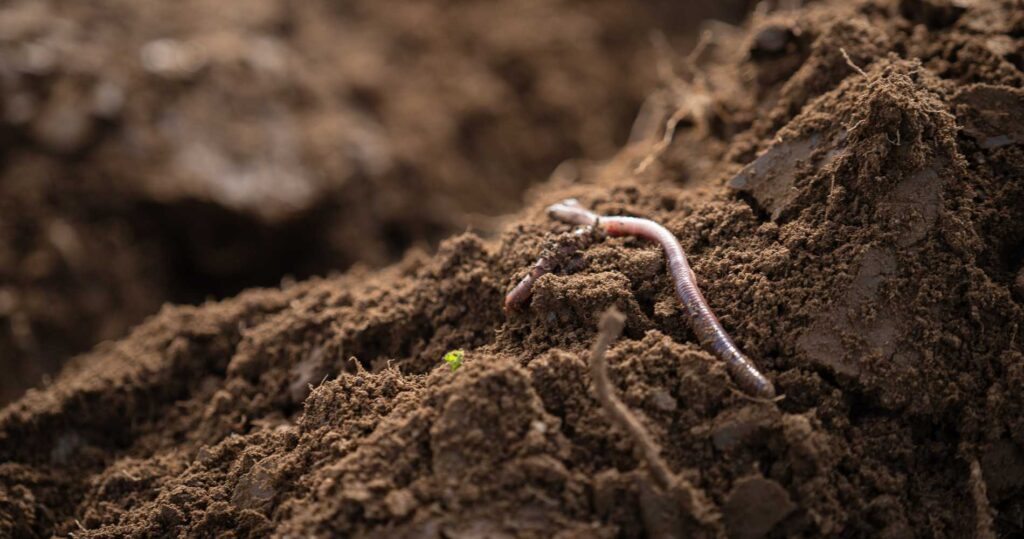
Beyond crop yield, Aaron’s trial highlighted benefits to soil health.
Soil pH stabilised in treated plots (6.05 to 6.35), while the control declined (6.14 to 6.04). This stabilising effect is consistent with wollastonite’s liming action.
For farmers, pH matters. Even small shifts can change nutrient availability, root function, and overall soil productivity. By helping soils hold steady at an optimal range, wollastonite sets the stage for sustainable yields over the long term.
“I’ve seen a real difference since I started applying wollastonite to my fields—especially my hay fields. In just over a year, I’ve managed to almost double my hay yield using 4 metric tonnes per acre. The whole process has been straightforward and hassle-free. UNDO and Canadian Wollastonite handled everything—soil sampling, shipping, loading, and spreading. All I had to pay was a very reasonable haulage rate.
One of the things I really appreciate is that they offer free soil sample analysis through proper agricultural labs, which helped me understand what my soil needed. Thanks to this program, improving my soil has become both simple and affordable. It’s made a big difference on my farm.”
Farmers Leading the Way
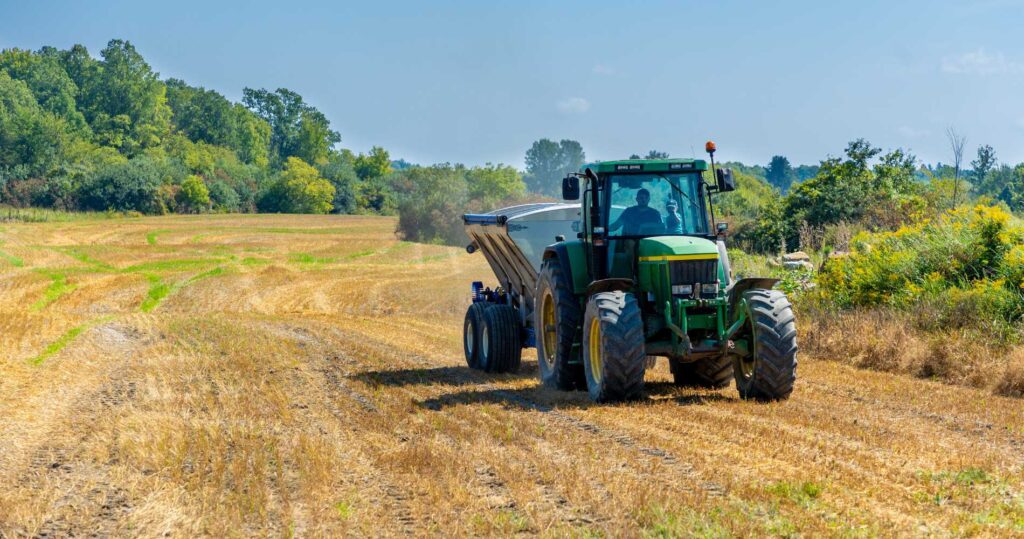
One of the striking things about the trial is how it came about. No government program or corporate lab experiment, just a local farm willing to try something different on its own land. That decision to put a field into trial tells us a lot about where agricultural progress really starts.
Farmers see first-hand what works and what doesn’t. They understand their soils, the seasons, and the pressures better than anyone else. When they test a new practice, whether it’s a new seeding method, a cover crop, or, in this case, wollastonite, the results aren’t theoretical. They’re measured in real yields, forage quality, and the bottom line.
Aaron’s willingness to split a field and compare results created clear data that now speaks to other operations across Eastern Ontario. The numbers are simple: more bales, higher nutrient uptake, and healthier soils. But the value goes beyond this one farm. Each trial adds to the body of knowledge that helps neighbours and the wider community make informed choices.
That’s why farmer-led trials matter. They bridge the gap between science and practice. Researchers can model how silicon should improve plant growth, or show it in small test plots, but only farmers can prove how it plays out at a field scale in the real world. Aaron’s trial is an example of that, evidence built by a farmer, for farmers.
What This Means for Other Farms

Forage farmers across Eastern Ontario face similar challenges to Aaron’s: balancing soil health, yield, and costs in a competitive market. The good news is that wollastonite is already being used on local farms through UNDO’s subsidized program.
– Practical: Spreads like lime with existing equipment.
– Cost-effective: Farmers only cover trucking, while UNDO takes care of supply and spreading.
– Local: Sourced from Canadian Wollastonite in Seeley’s Bay, Ontario.
By working with UNDO, farmers get access to a proven soil amendment that strengthens forage production while also contributing to measurable carbon removal.
Looking at the Bigger Picture
While Aaron’s results are specific to hay, they align with broader patterns seen in other crops:
– Corn: Trials have shown fuller kernel development and higher test weights after wollastonite applications.
– Pumpkin: Research from Rutgers University demonstrated that wollastonite raises pH and suppresses powdery mildew.
– Tomato: Studies confirm silicon’s ability to suppress root and crown rot.
– Barley: Calcium silicate improved tolerance to zinc imbalances by reducing oxidative stress.
Taken together, the evidence is clear: wollastonite delivers agronomic benefits across diverse systems, making it a versatile tool for Canadian farmers.
Stronger Yields, Stronger Soils, Stronger Farms
Canadian farmers have always adapted to changing conditions, finding practical tools to strengthen their soils and crops. Aaron’s hay trial is another example of that spirit in action. With wollastonite, farmers have a locally sourced amendment that has the potential to boost hay yields by around 80%, improve forage quality, and support long-term soil health.
The real story here is not about the mineral itself, but about the farmers who make the choice to put it to the test. Aaron’s results show what’s possible when innovation meets tradition: more bales in the barn, stronger soils underfoot, and a future that looks a little more secure for Canadian agriculture.
Download the Aaron’s Hay Report
Farmers and agronomists who want to dig deeper into the numbers can access the full hay yield report. It includes complete data on yields, tissue analysis, and soil trends from the trial.
